Monday, November 10, 2014

#6 - The Fall of Weimar and the Rise of Hitler

            The Russian Revolution and the formation of several parties along with financial woes created great challenges for Germany and its people towards the end of World War I. The Bolshevists were fueling many political protests within Germans’ minds using a lot of food shortages. These revolutionary ideas are important at a time like this because majority would never be attained in an election again by the current three parties running for power: the Social Democrats, the Liberals, and the Center Party. Germany doesn’t stay on firm ground because the “first German democracy emerged as the product not of an elected parliament and strong political parties but rather of a general staff at its wits’ end” (Hagen 197). This political indecision combined with dramatic inflation created by France taking away Germany’s valuable mines because Germans wouldn’t pay expensive war reparations caused great instability.

The direction of payments for the Dawes Plan
            Germany thought it had it figured out a solution though, with the Dawes Plan that allowed Germany to pay reparations off to the U.S. based on loans that quickly spurred activity in German production. This regaining of power was more of a false recovery however, as export trades overshadowed the more important domestic trade that was still struggling. Germany’s artificial economy was based on cartels, misdistribution of loans, and high wage costs. This economy wasn’t furthering German lives, but instead “had shaken the confidence of bourgeois society and ended its role as a distinct class that dominated the cultural scene” (220). The country was going back into social and economic turmoil and it didn’t help that the current president had little political background.

            A few more political parties attempted to solve Germany’s problems and one that stood out was the National Socialist German Worker’s Party (NSDAP). Adolf Hitler led this party and attracted people by having rationally-based campaigns. Hitler was unique because he “played to the emotional needs of the masses, which the established parties ignored” (231). Mentioned earlier was the democracy formed from what a staff of people thought was right, but Hitler decided to be more representative of the people. When Hitler was chosen as chancellor in 1933, the Weimar Republic was over. Hitler’s main plan of world dominance with a superior race over inferior people was kept hidden very well initially behind other tactical moves. The army Hitler worked with, the Reichswehr, was unconvinced and aggressive at first. However this changed as Hitler made his new Reichwehr reduce his own branch of storm troopers, the SA, and assassinating some leaders too. He affirmed his dictatorship by controlling the minds of people he could and eliminating the rest, “the Reichswehr remained silent even when its own generals Schleicher and Bredow were killed” (250). While doing this, the minister of propaganda, Joseph Goebbels, aided Hitler with controlling activities like book burnings, attacking music, and an overall changing of any non-fitting culture. These Hitler ideals stood outside of Germany as well. The “Germanization” of conquered lands would be enforced by the Reichswehr now under his control.
Members of the National Socialist German Workers Party
            The people outside of Hitler’s main circle weren’t aware of what Hitler’s overall goal was; Hitler wanted to go to war from the beginning of his chancellorship to not only reverse World War I results, but to gain more lebensraum and create world dominance. He specifically planned that the economy of Germany would need to be ready within four years for the war. This lebensraum was extended borders and more space for the Germans to live, and it started when German forces marched into and took Austria. This would end up being one of the few things that made the Germans happy as they were reunited with their people from the past, “the German population reacted with jubilation to the annexation of Austria, and so did the majority of Austrians” (261). The annexing would continue as Britain and others appeased Hitler with Czechoslovakia and then the Sudetenland where many more German speaking people resided. Afterward, Britain couldn’t take anymore and decided to make a pact with Russia, but it was too late as Hitler made a “pact” with Russia that he was planning on going back on later. His next move was to attack Britain, but after failed bombings with his Luftwaffe, he moved on and chose to fight Russia now. When the British fought back by bombing, the Germans were all stuck in bomb shelters and it “tended to wear down class distinctions…listened to the same slogans from the radio, stood in line for rationed goods…” (271). Unification amongst people was happening as the separated were together again, differences turned into similarities, and not much resistance was going on.
Austrians and Germans rejoiced when they were united again

            Unfortunately, this wasn’t exactly the motive behind Hitler’s plans; it was merely the beginning of something much worse. Poland was the next territory in Hitler’s sights. The second half of Hitler’s goal was now being implemented to full effect. Millions of Jews would be exterminated there and then in countless other locations as a way to achieve German world domination. German public lost most of its fervor for Hitler, trailing only a little longer with Goebbels and his propaganda. Germans spent years back and forth determining what type of government should be in place. Many views were shared amongst people and political parties, but by now they were feeling the shame of what they had become a part of.
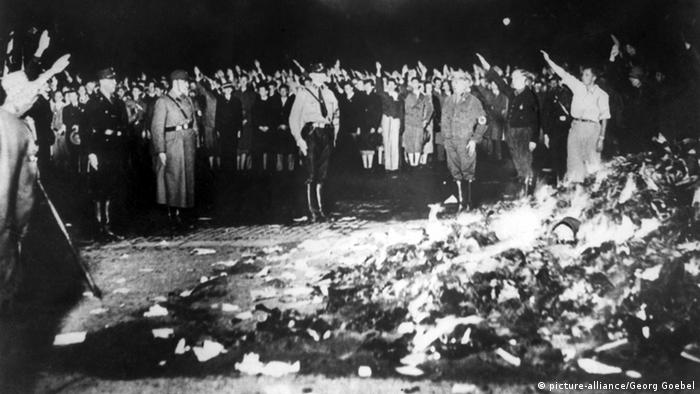
Goebbels's book burning was one way of stopping unwanted culture


Work Cited

Schulze, Hagen. "Germany: A New History". Trans. Deborah L. Schneider. Cambridge, MA:                             Harvard UP, 1998. Print


word count: 887

Wednesday, October 22, 2014

#5 - Unified by Words

            Germany was capable of being founded because it unified its higher, more educated class with its lower, common people. The nobles and the townspeople in the parliament were both in agreement when they finally were able to unite. The alleged nation tried to exist multiple times before, but both sides were never in sync with one another. In the early 1600s, the German people were considered weak and humiliating. Outsiders didn't think the Germans could form a separate nation since they couldn't exist without help from others, “the city’s rescue by imperial and Polish troops at the last minute…seemed like a miracle” (Hagen 73). The Germans actually fared quite well and became rather excited with victories in the Turkish Wars during the late 1600s, but Austria would go ahead and claim any credit. Austria was beginning to become its own power from all of this; however as a side effect it slowly let up its tight grip on the weak Germans as they weren't the main focus anymore.

Napoleon III
France was another force that helped the Germans by constantly pressuring them. When Bismarck took charge of trying to unify the Germans in the mid-1800s, he put his people to war against Napoleon III and his neighboring armies. Strategically speaking this wasn't in the German armies’ best interest, especially with future problems resulting from this, yet there was more to it, “Bismarck’s policies might appear utterly unprincipled, on the other hand they were clearly successful” (140). Organizations and smaller battles within the past hundred years had christened a feeling of nationalism before and Bismarck confirmed this against the French. His actions were right; patriotism was reignited and felt as the German armies strategically out-maneuvered the French in battle.

Nationalism and unification were accomplished for Germany, but it wouldn't have happened without the evolution of German identity which is the process I found most intriguing in these past few chapters read. Language is the glue for Germans; many things change, but language is one that generally stayed the same. The author constantly pointed at this, “existed solely on the plane of language” (90) and “powerless but intellectually supreme”(91). This and the idea of the German land being comprised of hundreds of little principalities is what creates this identity, this idea of Germany, yet without a physical Germany existing.
According to the German nation,
poets like Moser and not princes,
were the real heroes.
Rulers of these territories wanted to know what was going on in every region, but since they were so small in a vast area of land, they decided to implement qualifications and training to whoever they hired instead of being born outright into the royal role. Increased language skills and speech development was a result of this as these became necessary for higher positions. As intelligence and language improved, more literature, dramas, and poetry were produced. This was in part because writers “identified themselves with a modern spirit being embraced by the middle-class Germans throughout many regions” and less because their end products were being purchased (89). With all this happening, poets, artists, and philosophers became the real heroes as they helped unify the public's educated opinions with their writing.


1770's Map of German Principalities

Language and Germans evolved through this process, but unification only existed between the educated classes. Many lower class people were still in favor of an empire, but once the principalities were rearranged again and the number of areas decreased dramatically, they realized how they had closer relationships with their surrounding areas and the empire loving views disappeared. Each time Germans thought about joining together, they had the core piece, language, but something would always get in the way. After all those threats such as enemies, economic slumps, and differing opinions were taken care of with nationalism, rearrangement, intelligence, and other triggers, the power of language finally reached its fullest potential and united Germany.


Work Cited

Schulze, Hagen. "Germany: A New History". Trans. Deborah L. Schneider. Cambridge, MA:                             Harvard UP, 1998. Print

word count: 627

Saturday, September 6, 2014

#4 - Berlin's Unique Growth and Split

I found the reign of Frederick the Great to be very interesting as he was not a traditional powerhouse leader who had a love for war that would raise him up on a pedestal above everyone else. Instead, Frederick, also commonly known as Fritz, had a more refined passion that consisted of poetry, music, and art. In the eyes of his father, King Frederick William I, he was rebelling with this strong love for the arts and because of this was imprisoned for some time. Writer and philosopher Voltaire inspired Fritz a great deal with his views on education and when it was time to accept being king following his father’s death, Frederick the Great looked to improve the people’s status and not solely his. He even demonstrated this by ridding princes and others of divine rights; hopefully positions would be elected more on merit and worth to the people then. Frederick went on to win several important wars and battles expanding Prussia’s territories. Afterwards, he commissioned the construction of the Brandenburg Gate (seen below).

A statue of four horses and the Goddess of Peace sits atop the Brandenburg Gate.

I think it is simple to see this monument as being a symbol of peace, but many people throughout Berlin's years saw this as great militarism and rule. Frederick the Great showed great power after gaining so much land and using amazing maneuvers and strategy to do so that this structure would remind people of that. And if time is fast-forwarded to the 1950's, communist  East Berlin would see this power in a negative light; so much so, East Berlin had Frederick the Great's other statue, one of himself, removed as it was a bad influence.
Removed and brought back by East Berlin

Frederick had fans of both extremes. One side looked up to him as shown by the admiration of the large platformed statue to the right. Many East Berliners thought he exploited his people though, and dropped his 'Great' title, simply referring to him as Frederick the Second. However, what amazes me more is after East Berlin denounces Frederick the Second, they bring him back. By 1980, Ol' Fritz was embraced again for his compassion and tolerance. Why such a drastic change in just twenty years? Their love for his military ethic must have been the reason; they needed a new, or old, power figure to put a charge back in people. This decision baffles me as the Frederick the Great considered justice to be the main priority over all other concerns.


East Berlin had a lot to say about Frederick and he had been dead for some time, just imagine what they were saying about living people. Well the Americans and British in West Berlin did not want to imagine; they came up with a plan to hear about those living people. While the Russians were busy using rubble from the end of World War II to build monuments both honoring soldiers and shaming others, the West was creating a hill with their rubble for a listening post. How ingenious was this?! Actually, at first I thought this was very impractical, but after learning that this bold strategy helped the West listen in on conversations miles and miles away (and leaving out the ethics question for a moment), I decided to change my mind.


The largest station is on Teufelsberg, which can be translated to Devil's Mountain.

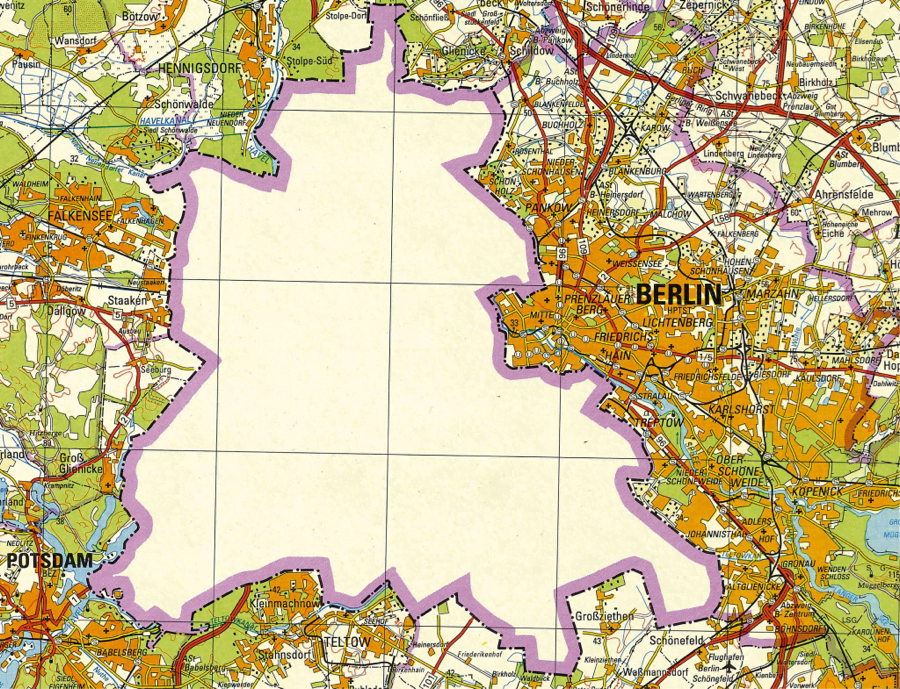
1980's map of Berlin


The measures East & West Berlin were going through to hide and uncover information about themselves were new and intriguing to me, especially West Berlin being left off the map purposefully by East Berlin.


word count: 613

Tuesday, September 2, 2014

#3 - Martin Luther: 16th Century Revolutionary

In order for Germany to continue its emergence from the Roman Empire, it needed someone the people could follow or look up to. Martin Luther was this man by standing up against the Roman Church and inspiring many others to do the same with their beliefs. Luther religiously attacked the Church and more specifically the Pope, with his 95 Theses which explained all that was wrong such as the Church manipulating its powers over its people.

Martin Luther is believed to have nailed his 95 Theses to the doors of the Church of Wittenburg. Speaking out about the Church was gutsy, but to physically show it and make it public for all to read and question their own thoughts was even braver. Could something revolutionary bloom from this perhaps? This alone would not be enough to make Luther succeed though.

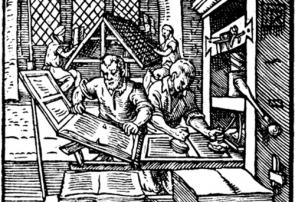
It was taking too much time to hand write papers and give them out, so Martin Luther chose a different option which would help him tremendously. The use of the printing press (illustrated below) was what quickly made a person's opinion into a voice of the German lands. News of what Luther had discovered about invented sacraments not in the Bible and his views toward the use of unnecessary clergymen and superfluous spending spread across Europe.
Inking, pressing, and arranging plates were separate jobs to make publication even faster.
Martin Luther's religious outcry is now paired with a political following due to the gaining number of people he has campaigned for with his texts. By this time, the Church demanded he recanted his Theses and warranted for his arrest, but with support, Luther would defend his points to gain a dire friend later. He argued ordinary Christians have a role in the Church and more direct contact should be made with God, instead of being intersected by clergymen. This individualized form of prayer would transcend into a bigger cultural problem for the Empire. People eventually had a more individualized way of living outside of the Church as well, as they were free from lords. Martin Luther called it personal freedom and this was clearly demonstrated by rules, welfare, and education being reorganized, but also by the much more brutal riots, slaying, and bloodshed that went on.

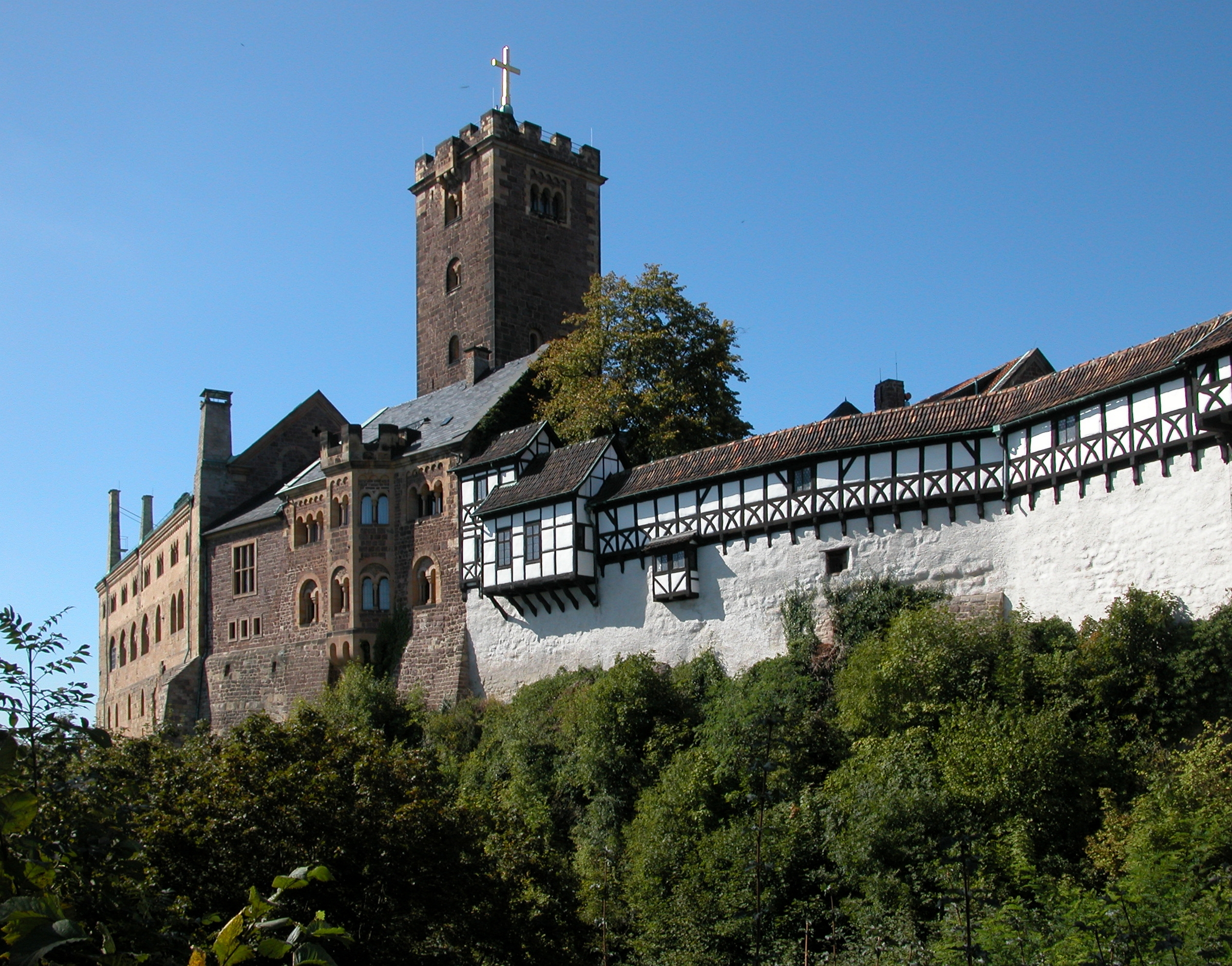
Luther was held in Wartburg Castle where he translated the Bible to German.


            However, Luther was not in charge of or aware of this war that was going on. As he was being transported back home, he was secretly captured with help from his newly made friend and hidden in a castle for safety. While being trapped in the castle, Luther still continued his revolutionary efforts as he would go on to translate the Bible into German. This would effectively allow the German people to read and see for themselves that they could connect with God, instead of being told by the members of the Church what to do.

Once freed, Luther was shocked to hear of the bloodshed lost. He would devote himself to speaking out, preaching not to use violence, and teaching his principles in hope to fix this.


word count: 517

Thursday, August 28, 2014

#2 - Looking Back and Within: 15th Century Germany


The origin of Germany is stranger than most nations in the sense that it had already started before it began. It was not until the mid-15th century when things were shaken up due to the Germanic peoples disagreeing with an instruction by the Holy Roman Empire they were a part of, that helped start separate the two. It is not unreasonable to see why the German people did not want to follow the Empire’s orders of marching into Constantinople and capture it. These people were tired of being told what to do, while their nation was in complete disarray.

 Pictured to the left are a group of prince electors discussing their next decision. A prince elector was in charge of representing their specific estate. I think it is neat that is was the German prince electors that stood up and ultimately gave stuck it to the Emperor, saying their people would not fight unless he fixed what was going on at home first. Out of all the states the Empire was in control of, it is interesting that it would choose to boss around and ignore the German Nation as the German people were very much responsible for helping gain control of some of the Empire’s territory. Surely, the Empire would realize that eventually the Germans would fight back, but apparently it believed they would not be a threat as they had nothing to back up their independent ways.

Up until then, the Roman Empire was right, the German nation did not have enough to support their separate way of living. They just had ideas to go along with their different dialects and culture. What amazes me, was that it was enough; they just needed help from a book to back them up. Pictured to the right is a statue of the ancient historian Tacitus, who lived during the 1st and 2nd century, and happened to write a text titled Germania that was found and republished. This text gave importance to the Germanic people back then and showed them as an individual group set from the rest. An old book written centuries ago by one person still surprises me on how much weight and power it can give to people. This propelled the German people past adversity and gave them that nationalistic pride. These German people did not need to change very much; they simply needed to look within and realize what Tacitus had noted and observed centuries ago. It is also interesting to see that the German people moved closer toward a true German nation-state through intelligence and culture and not by the common barbaric way of killing and capturing.


word count: 441

Sunday, June 8, 2014

#1 - Why Germany?

I am very excited to travel to Germany as this will be the first time I've been out of the country. My sister studied abroad while she was in school and couldn't say enough about how amazing the experience was, so I had I to follow her footsteps and go somewhere. Germany is very interesting to me as it is a place that I know very little about except from World War II history classes; I love history, but I want to expand my view on Germany and see it for what it is now and not what is was.
While attending the many study abroad presentations, Germany's stood out because of the gorgeous scenery with cathedrals, castles, churches, and more that was shown to us. I find architecture really fascinating and can't wait to see them and walk through some when we're there.
For instance, the Hohenzollern Castle (pictured above) was the royal home to the Hohenzollern family and was constructed in the 11th century. The spires, tall walls, and the secluded location of the castle on top of a mountain creates a breathtaking view and is totally opposite of the architecture in present-day Berlin buildings. The Berlin Central Station (picture below), contains many modern aspects such as the arch of glass windows, clean-lined design, and open layout. These are just two examples of how architecture can drastically vary, but both still be impressive in their own way. Being able to use the German transportation system will not only get me from activity to another on our itinerary, but it will also open my eyes to all the incredible cities and buildings around.
I will need to restrain myself from looking all around the whole time though as being in an entirely new place with a different language will definitely be the most difficult obstacle while I'm in Germany. However, I fully accept this challenge and plan to step out of my comfort zone; I'm not flying all the way to Germany to do the same things I would do here at home. I am interested in learning about the different culture and comparing it to ours back in the States. Values, traditions, and rules all vary from group to group and as a marketing and management major, I think it's important to recognize these and learn from them. I'll be looking at the way people value their sense of time and how they interact with one another, whether it's really personal or from afar and how hard people will try to sell something to you. The quality and pricing of products will also be a big factor as it is a big contributor for businesses here.
Overall, I look forward to learning about new culture, seeing new places, having fun with friends, making new ones, and representing North Central College in a positive way.


word count: 476